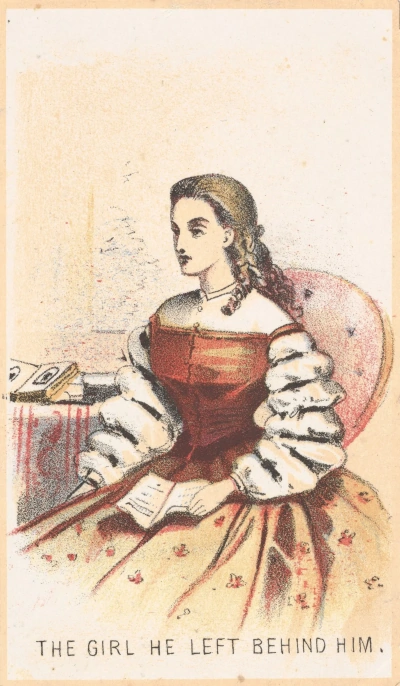
The life in the camp. Part 2. The girl who left. by Winslow Homer
The painting The life in the camp. Part 2. The girl who left. painted by Winslow Homer, depicts a campsite scene during the American Civil War. In this painting, you can see a young girl who seems to be leaving the camp, with a melancholic expression on her face. The composition is full of realistic details that reflect the harshness of life in that war context.
The color palette used by Winslow Homer in this work is mainly dark, with earth tones and grays that reinforce the somber and desolate atmosphere of the camp. The dim lighting helps create a mood of sadness and nostalgia.
The gestures and expressions of the characters in The life in the camp. Part 2. The girl who left. convey a narrative sense to the scene, inviting the viewer to reflect on the human consequences of war and the suffering it brings.
When was the painting The life in the camp. Part 2. The girl who left. painted?
The painting The life in the camp. Part 2. The girl who left. It was painted in the year 1865.
Artistic style of The life in the camp. Part 2. The girl who left.
The artistic style of The life in the camp. Part 2. The girl who left. falls within realism, characterized by faithful representation of reality and attention to detail. Winslow Homer manages to capture the emotion and raw reality of the American Civil War through his masterful technique and ability to convey emotions through his characters.
The choice of colors, the carefully planned composition, and the expressiveness of the faces in The life in the camp. Part 2. The girl who left. are elements that stand out in this work and place it as a representative piece of realism in 19th-century art.
History of the painting The life in the camp. Part 2. The girl who left.
The story behind The life in the camp. Part 2. The girl who left. by Winslow Homer focuses on the artist’s inspiration from the experiences of the American Civil War and his eagerness to portray humanity and the consequences of armed conflict. The work reflects the suffering, melancholy, and hope present in that historical context, leaving an indelible mark on those who view it.
If you are interested in a framed replica of this work, our personal recommendation is the store Fine Artic. They offer a very high-quality service at fantastic prices; as long as the work is free of rights, you can fill your walls with art without having to spend too much.


